NASA's Artemis program aims to return humans to the Moon as a proving ground for later Mars missions. For centuries, humanity has looked at the stars with wonder and curiosity. In 2026, we are standing on the precipice of a new era-one where we are moving from being observers of the cosmos to active participants in it. The barriers to space are falling as commercial innovation and international cooperation drive us further from Earth than ever before. From the establishment of permanent lunar bases to the long-term dream of a multi-planetary existence, the future of space exploration is not just about science; it is about the next chapter of the human story.
1. The Martian Dream: A Multi-Planetary Future
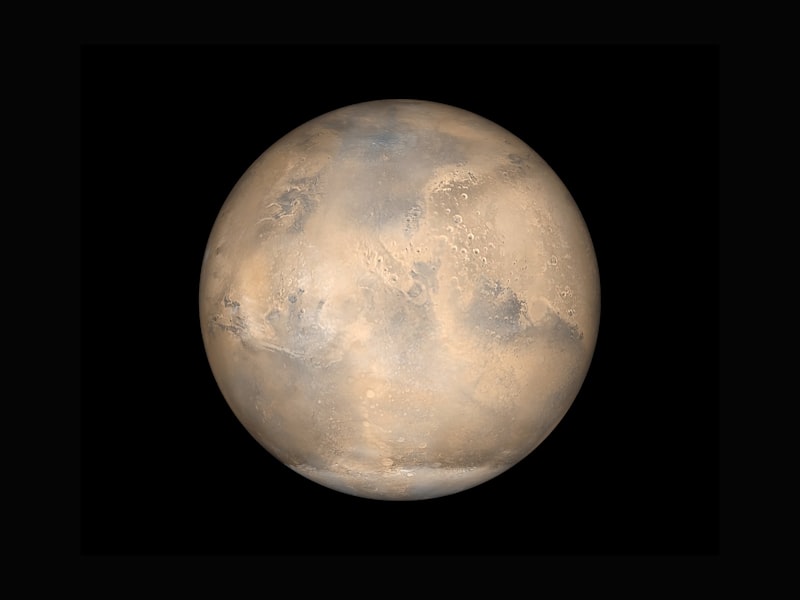
Mars has always been the primary goal for long-term space colonization. Its proximity and similar rotational period make it the most viable candidate for a second human home. In 2026, the first crewed missions to Mars are moving from planning to testing of heavy-lift rockets like SpaceX's Starship. The challenge is immense-from surviving the six-month journey to shielding colonists from lethal solar radiation.
Colonizing Mars isn't just about an "emergency backup" for Earth; it's about the scientific and technological breakthroughs that come with learning to live in a hostile environment. The water-recycling and energy-generation technologies developed for Mars will likely solve many of the resource challenges we face here on the Blue Planet.
2. The Lunar Gateway: Mankind's Next Deep Space Hub
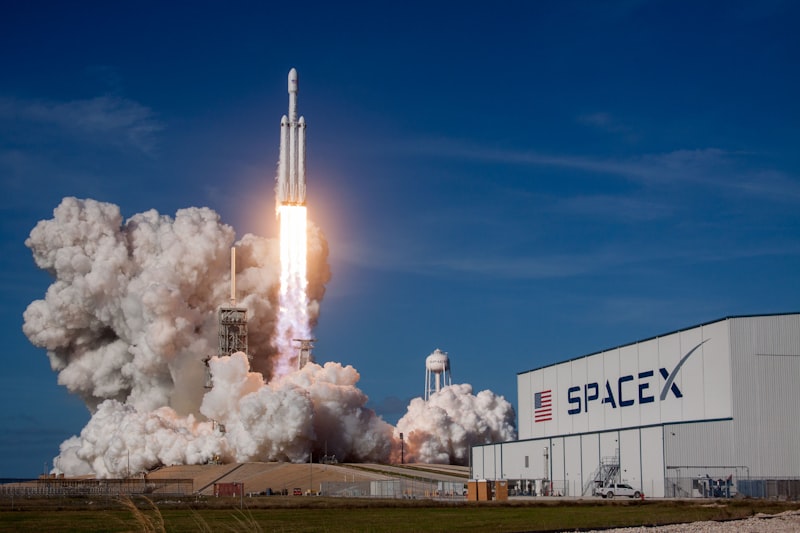
The Moon is no longer a destination; it's a stepping stone. NASA's Artemis program aims to establish the "Lunar Gateway," a small space station orbiting the Moon that will serve as a hub for both lunar surface missions and deep space travel. It will be the furthest human outpost in history, acting as a communication relay and a fuel station for ships heading to Mars.
By establishing a permanent presence on and around the Moon, we can test long-term life-support systems in a real-world environment. It's a necessary "shakedown cruise" before we attempt the much more dangerous journey to the Red Planet. The Moon is the testing ground for the future of humanity.
3. Space Tourism: Democratizing the Final Frontier

For decades, space was the exclusive domain of highly trained government astronauts. That has changed. Companies like Blue Origin and Virgin Galactic are now regularly taking private citizens to the edge of space. While currently a luxury for the ultra-wealthy, the rapid reduction in launch costs is making "orbital hotels" a serious topic of engineering discussion for the 2030s.
Democratizing space access will lead to the "Overview Effect"-the profound shift in perspective that comes with seeing Earth from above-being experienced by more than just a handful of humans. This could lead to a global increase in environmental awareness as more people witness the frailty of our planet's atmosphere.
4. Asteroid Mining: The Next Industrial Revolution

The resources of the solar system are virtually infinite. Rare minerals like platinum and cobalt, which are increasingly scarce on Earth, are found in massive quantities in near-Earth asteroids. Companies are currently developing robotic scouts that can identify mineral-rich asteroids and even redirect them for processing.
Asteroid mining could end the era of ecologically destructive mining on Earth, moving the heavy industrial load of our society into the void of space. It's a key part of the vision for a sustainable, high-tech future where we no longer need to scar our own planet to fuel our progress.
5. Exoplanets & The Quest for Life Beyond Earth
One of the most profound questions in science is: *Are we alone?* We are closer than ever to answering it. Thousands of exoplanets-planets orbiting other stars-have been discovered in the "Habitable Zone," where liquid water could exist. New missions are specifically designed to analyze the atmospheres of these distant worlds for "biosignatures" like oxygen and methane.
Discovering even a single microscopic life form beyond Earth would change everything we know about biology, philosophy, and our place in the universe. It would prove that the spark of life is not a freak accident unique to Earth, but a common phenomenon throughout the cosmos.
6. The Webb Telescope: Seeing into the Deepest Past
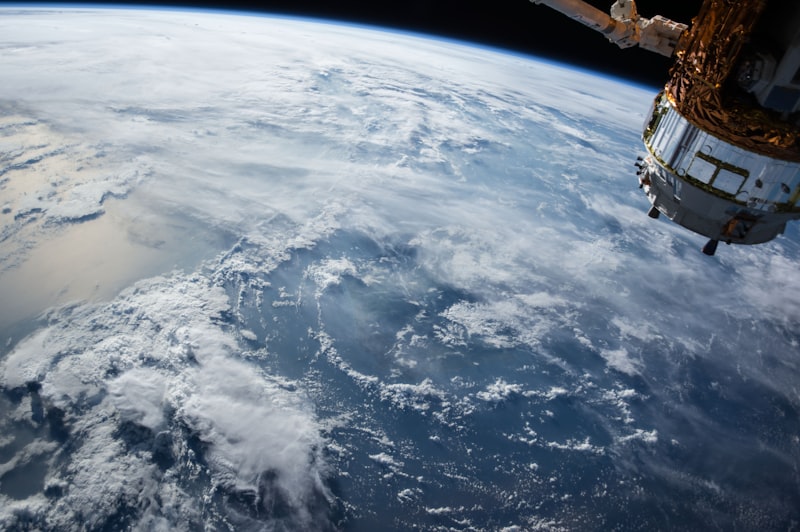
The James Webb Space Telescope (JWST) is acting as a time machine, allowing astronomers to see the very first stars and galaxies formed after the Big Bang. Its infrared vision can penetrate the thick clouds of dust that shrouded the early universe, revealing the origins of the structures we see today. It's a masterpiece of engineering that's rewriting the textbooks almost every month.
As we see deeper into the past, we understand more about the future of our own galaxy. The JWST is just the beginning; even larger telescopes are being planned for the lunar far side, which is the quietest place in the solar system for radio and infrared observation.
7. The Growing Challenge of Orbital Debris
As the number of satellites in orbit grows, so does the risk of the "Kessler Syndrome"-a chain reaction of collisions that could make orbits unusable for centuries. There is an urgent need for international "space traffic control" and technologies that can capture and de-orbit old satellite junk.
Sustainability is just as important in space as it is on Earth. If we don't manage our near-Earth environment responsibly, we risk trapping ourselves on the planet, unable to launch the missions that define our future. The cleanup of the "Orbital Attic" is the next great environmental challenge.
8. Ion Propulsion and Solar Sails: Next-Gen Travel
The chemical rockets we've used since the 1960s are incredibly inefficient for deep-space travel. Future missions will rely on Ion Propulsion-which uses electricity to accelerate particles-and Solar Sails, which catch the pressure of sunlight itself. These technologies allow for constant, low-thrust acceleration that can reach incredible speeds over time.
This will drastically reduce the travel times to the outer planets and beyond. We are currently testing "Light Sail" technology that could one day reach the nearest star systems within an individual's lifetime. The "Era of Sail" is returning, but this time, it's in the vacuum of space.
9. International Cooperation: The Artemis Accords
Space is too big and too expensive for any one nation to conquer alone. The Artemis Accords are a set of principles designed to ensure that space exploration is peaceful, transparent, and cooperative. By establishing shared standards for lunar resource extraction and scientific research, we can avoid a "Space Race 2.0" that leads to conflict.
The International Space Station (ISS) has shown that adversaries on Earth can work together in orbit. As we move further out, that cooperation will become even more vital. Space has the potential to be a unifying force for all of humanity, reminding us that we are all travelers on the same small planet.
10. Preparing Humanity for the Long Journey
Finally, the future of space exploration is not just about rockets; it's about us. Long-term space life requires us to solve the challenges of low-gravity health, psychological isolation, and closed-loop ecosystems. We are fundamentally a "biological" species, and taking that biology away from Earth is the ultimate experiment.
Preparing for space forces us to rethink everything-from how we grow food to how we govern ourselves. As we leave our cradle, we are not just exploring the universe; we are discovering who we are and what we are capable of as a species. The Final Frontier is the ultimate mirror.
Kueef's Take
At KUEEF, we believe that space exploration is not a distraction from our problems on Earth; it's an essential part of the solution. The perspective gained from the stars-the realization that we are all on a "pale blue dot"-is the ultimate antidote to provincialism and short-sightedness. Every dollar invested in space provides multiple dollars in technological and scientific return for life on the ground. We were born to wander, and the stars are the ultimate destination. The journey has only just begun.
Sources & further reading
About James Okonkwo
James covers space, physics, and discovery stories with references to NASA, ESA, and primary mission pages.